
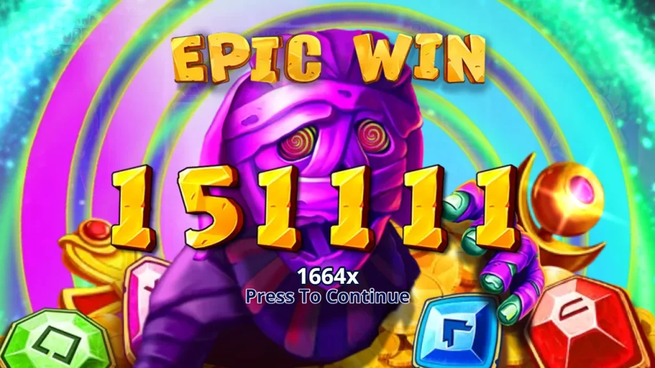





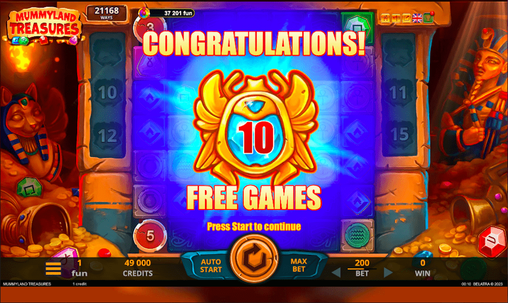
How Does the Mummyland Treasures Demo Bonus Buy Work?
Try the Mummyland Treasures slot with virtual stakes, set your pace and limits, and then play mindfully in Poland.
What to Check in the Mummyland Treasures Slot Demo in 2026
Imagine it’s quarter past work and you want to quickly assess whether this title suits your tempo. In practice mode, you can spin a few times, but the most insight comes from a mindful test, not a random streak. Start with the rules panel: check special symbols, entry conditions for features, and how the game signals key moments (counters, animations, hints). Then set a stake level you can easily control, and don’t keep changing it—this way, you’ll see the rhythm without noise. Pay attention to readability on mobile: are stake changes and pauses accessible, or do you have to “hunt” for buttons? Finally, assess how you emotionally respond—do you immediately speed up after a bad stretch? In 2026, such self-observation often matters more than the mechanics themselves, because the game should entertain, not plunge you into chaos.
How to Use the Mummyland Treasures Demo Play in Poland
Let’s say you want to try the game risk-free, yet you don’t want to waste time spinning “just for the sake of it.” Set a session goal: learn the symbols, test the tempo, or check whether the interface is comfortable on your device. In practice, a 3x5-minute plan works best: first, slow spins and observation; then, test settings (speed, sound, rule view); finally, try one stake change. If you’re playing on a platform available in Poland, treat this stage as preparation for responsible gambling—intended for adults with budget control. The demo version won’t “convince” you with a result; it aims to give you confidence that you understand what you’re doing. Once, after a session, you can clearly explain what triggers features and how special rounds end, you’re already one step ahead.
Session Setup and Reading the Game’s Mechanics
Usually, players start by clicking “start” and only think about limits after several minutes. Better reverse the order: set the boundaries first, then play. Define the time, maximum number of spins, and break timing—as if you were planning a short training session, not a marathon. Then focus on the mechanics: what do the special symbols do, how do hits form, and when is it wise to slow down? In Mummyland Treasures, it’s also useful to observe whether the game rewards patience or short bursts—this isn’t fortune-telling, but gathering your own session insights. If halfway through you catch yourself clicking automatically, stop and revisit the rules description. It’s a simple habit that makes a difference in the long run.
How to Approach Buying Bonus Features
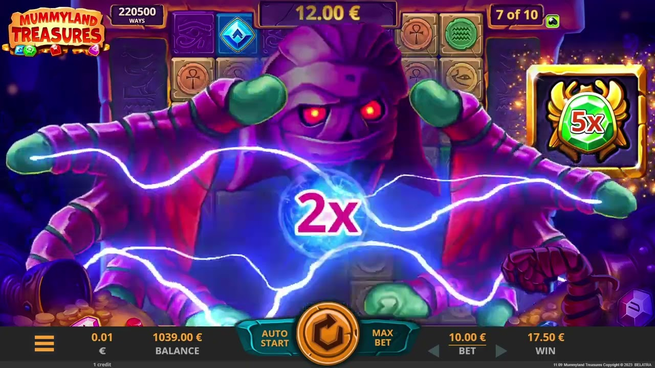
Imagine you want to see a special round quickly because you’re short on time and don’t want to wait for a random trigger. Many players then choose the feature buy option—but often make one mistake: doing so without preparation. First, check the rules to see exactly what you receive: is it a full round or a shortened version, and how does the round end? Only then set a stake that won’t force you to “chase losses” after a failed outcome. In training, treat this as a mechanic demonstration: observe the flow, note the symbols, and identify moments when the dynamics shift—then return to regular spins to compare experiences. This approach is calm and practical—free from emotional urging.
How to Test Variance Without Chasing Results
If you hit a bad streak, it’s easy to think: “just a few more, it’ll turn around soon.” We know this feeling. Imagine playing late at night, spinning faster with each click—decisions then become impulsive. Instead, test variance in blocks: make a fixed number of spins at one stake, take a break, and only then move to the next block. Focus on the rhythm of small wins, the length of gaps between them, and how often symbols appear that “boost” the board. This isn’t about deriving statistics, but about your own experience—does this style relax or irritate you? If it irritates, setting time limits and applying stop-losses after each major event can save your session.
10-Minute Test Plan
Set a timer and divide your trial into three short stages. First, 3 minutes of calm spins; then, 4 minutes observing special symbols; finally, 3 minutes exploring settings. Imagine this as a warm-up—it should give you control, not an emotional rollercoaster. Afterward, answer one sentence to yourself: what was clear, and what needs repeating?
Notes That Shorten Your Next Session
After training, you often remember only “it was fun” or “it was nerve-wracking.” That’s not enough if you want to play mindfully. Write down three things: a comfortable stake, pacing settings, and situations that caused rushing (e.g., long gaps without wins). Imagine returning after a week—you’ll start precisely where you left off, instead of relearning from scratch.
Registration, Budget, and Payments — Step by Step
Suppose after several training sessions, you already understand the rules and want to play with real money. The order of steps then matters: account, security, limits, and only then deposit. The platform is available in Poland and should be used in accordance with applicable regulations and exclusively by adults—this is the foundation of responsible gambling. Set a budget you can lose without disrupting your weekly plans, and stick to it—even if the temptation to play “just a moment more” arises. In practice, a simple rule helps: one session, one amount, one break. If you like order, prepare verification documents in advance, as this often simplifies payouts. It may sound formal, but it brings peace of mind when you want to close the topic without stress.
Account, Safety, and Profile Settings
Imagine logging in on a new phone and not remembering what data you provided or where security settings are. This common scenario ends in frustration. After registration, go straight to your profile: set a strong password, enable additional verification if available, and review notifications so the game doesn’t distract at the wrong time. Next, set deposit and play-time limits in the responsible gambling panel—done calmly, these work better than decisions made under pressure. Finally, ensure your personal details match your documents. It’s a small thing that often saves email exchanges with support during your first withdrawal.
Deposits and Payment Methods — What to Look For
Usually, you choose a payment method “because it’s fastest” and only later discover limits or extra confirmations. Imagine topping up during a break, only for your bank to block the online transaction—suddenly, the whole session loses meaning. Check three things: whether the method supports online payments, whether your data matches your profile, and what limits your bank or provider imposes. If possible, separate your gambling budget from your main card—it makes control easier. Below is a practical cheat sheet—no promises about timeframes, as these typically depend on the chosen method and authorization.
Payment Option | Most Convenient Time | What to Check Before You Start |
Credit/Debit Card | When you want simple reloading and a clear transaction history | Bank limits, online payments, transaction confirmation |
Bank Transfer | When you prefer classic methods and greater control | Recipient details, transfer description, possible bank delays |
E-Wallet | When you want to separate your budget from your card | Wallet verification, limits, possible fees |
Mobile Payment | When you mostly play on your phone | App authorization, daily limits, device security |
Prepaid Voucher | When you don’t want to link a bank account | Denominations, usage rules, top-up availability |
Limits, Breaks, and Self-Control Tools
If you’re playing for fun, limits aren’t obstacles—they’re a plan. Imagine a tough day: bad mood, little sleep, and the desire to “blow off steam” by clicking. In such moments, time and deposit limits act as emergency brakes. Set a break reminder too—after 20–30 minutes, it’s easy to slip into auto-pilot. Know your self-control tools: temporary locks, mandatory breaks, and self-exclusion—even if you don’t need them now, it’s good to know where to find them in the panel. Crucially, don’t set limits based on “hopes,” but on realistic budgets and actual timeframes. That way, gambling stays entertainment, not obligation.
Withdrawals, Support, and Common Issues
Imagine finishing a session with a result you like and wanting to withdraw immediately. Suddenly, additional steps appear, and you start to get nervous. Calm down—this is often standard procedure in many services for account and transaction protection. The simplest method works best: verify your details, choose a method, confirm the request, and monitor the status. Avoid changing payment methods mid-withdrawal, as this may prolong the process. If there’s a delay, gather information (date, method, message) before contacting support. This order shortens your conversation and reduces guesswork.
How to Submit a Withdrawal and Check Its Status
Usually, the biggest stress comes from not knowing where to track progress. Imagine refreshing your balance every minute—it only amplifies emotions. Instead, go to the transaction history and look for the status of the request, not just the “empty” balance. Before submitting, ensure your profile data is complete and matches your documents—it’s a common delay point. For your first withdrawal, consider testing a smaller amount to learn the steps without pressure. After submitting, don’t file multiple requests at once—one request, one method, one tracking path. This makes it easier to return to the issue if you need support.
What to Do When Verification Is Required
If the system asks for identity confirmation, many people delay it “until later” and later rush. Imagine planning a withdrawal before a trip and suddenly lacking one document photo—it becomes nerve-wracking. Better handle this during a calm moment: prepare clear photos, check that your profile data matches, and don’t use someone else’s payment methods. Verification isn’t the time for experiments. If support asks a question, answer concretely: what you sent, when, and what status you see. The fewer assumptions, the faster progress is made.
How to Contact Support to Get Help Quickly
Often players send messages like “it’s not working” and wait for someone to guess the issue. Imagine a support agent who sees thousands of tickets—without specifics, yours ends up at the bottom. Write briefly but precisely: device, payment method, date, last message, transaction number (if available). Add what you’ve already tried (re-login, data check) to avoid receiving the same response. Stick to one thread and one contact channel—splitting the case across multiple places lengthens everything. When you need a quick reply, a calm tone is more effective than emotions—it’s practicality, not lecturing.
Device Hygiene and Account Protection
Imagine logging in via a public network and sudden disconnections—such things can appear suspicious to security systems. That’s why focus on basics: update your OS and browser, remove suspicious extensions, and log out after each session. Never save passwords on shared computers, never share verification codes, and review login history if available. It’s also wise to separate leisure from daily finances: a dedicated budget and clear limits reduce impulsive decisions. If you notice unusual activity, act immediately—changing your password and contacting support beats waiting for “it to pass on its own.”
Common Beginner Mistakes and a Simple Plan
Usually, the number one mistake is lack of a plan. Imagine walking into a game “just for a minute” and waking up an hour later having forgotten anything about that session. In 2026, with everything fast and mobile, slipping into auto-pilot is easy. The second mistake is jumping between stakes without purpose; the third is playing without breaks. A simple plan sounds dull, but it works: set time, budget, take a break, finish. If you want, add one learning element per session—e.g., observing special symbols or checking settings. Then entertainment becomes more mindful, and the risk of impulsive moves drops.
Checklist Before Playing with Real Money
Imagine a pre-travel checklist—you don’t come back for your passport. Before a session, set time and budget limits, verify you know how to access your transaction history, and ensure your profile data is complete. Next, choose one starting stake and decide when you’ll take a break (e.g., after a set number of spins). If you feel urgency, apply a stop-frame: put down your phone, stand up, and return only after a minute. Finally, have an exit strategy—know when to stop, regardless of the result. These are simple steps, yet in practice, they distinguish relaxed entertainment from “emotion-driven” play.
FAQ
How to Start a Trial Game Without Pressure?
First, define a goal: learn the symbols, tempo, or settings. Imagine you only have 10 minutes—stick to one stake and avoid changing it every few spins. Review the rules, play a short spin block, take a break, and only then assess your experience. If you notice automatic clicking, return to the info panel and remind yourself what triggers special features.
Is It Worth Setting Time and Deposit Limits Right Away?
Yes—ideally, set them while calm, before emotions take over. Imagine a losing streak and the thought “just a little more”—limits prevent this reflex. Define realistic session time and a budget you can afford to lose without disrupting plans, then stick to your settings like a training plan.
What to Do If a Withdrawal Takes Longer Than Expected?
First, check the status in transaction history and ensure there’s no request for additional information. Imagine a weekend or temporary delays on the bank’s side—they can prolong the process. If the status remains unchanged for longer, prepare specific details (date, method, message) and send one clear request to support.
How to Prepare for Verification to Avoid Getting Stuck?
Do this earlier, not at the moment you want to quickly withdraw funds. Imagine the rush before a trip—missing just one document photo can halt the entire process. Ensure clear files, consistency with your profile data, and use your own payment methods—do not "borrow" accounts.
How can I tell if I need a break from playing?
If you're speeding up spins, increasing stakes without a plan, or playing longer than intended, that's a warning sign. Imagine someone beside you watching your decisions—are they calm or impulsive? Taking a break, setting a time limit, or enabling a temporary block helps restore enjoyment without stress.
What’s the best way to contact support if I have an issue?
Write briefly and specifically: device, date, payment method, latest message, and status from your transaction history. Imagine a support agent who doesn’t see your screen—the more facts you provide, the fewer follow-up questions. Also mention what you’ve already checked, and stick to one thread to avoid splitting the case across multiple conversations.